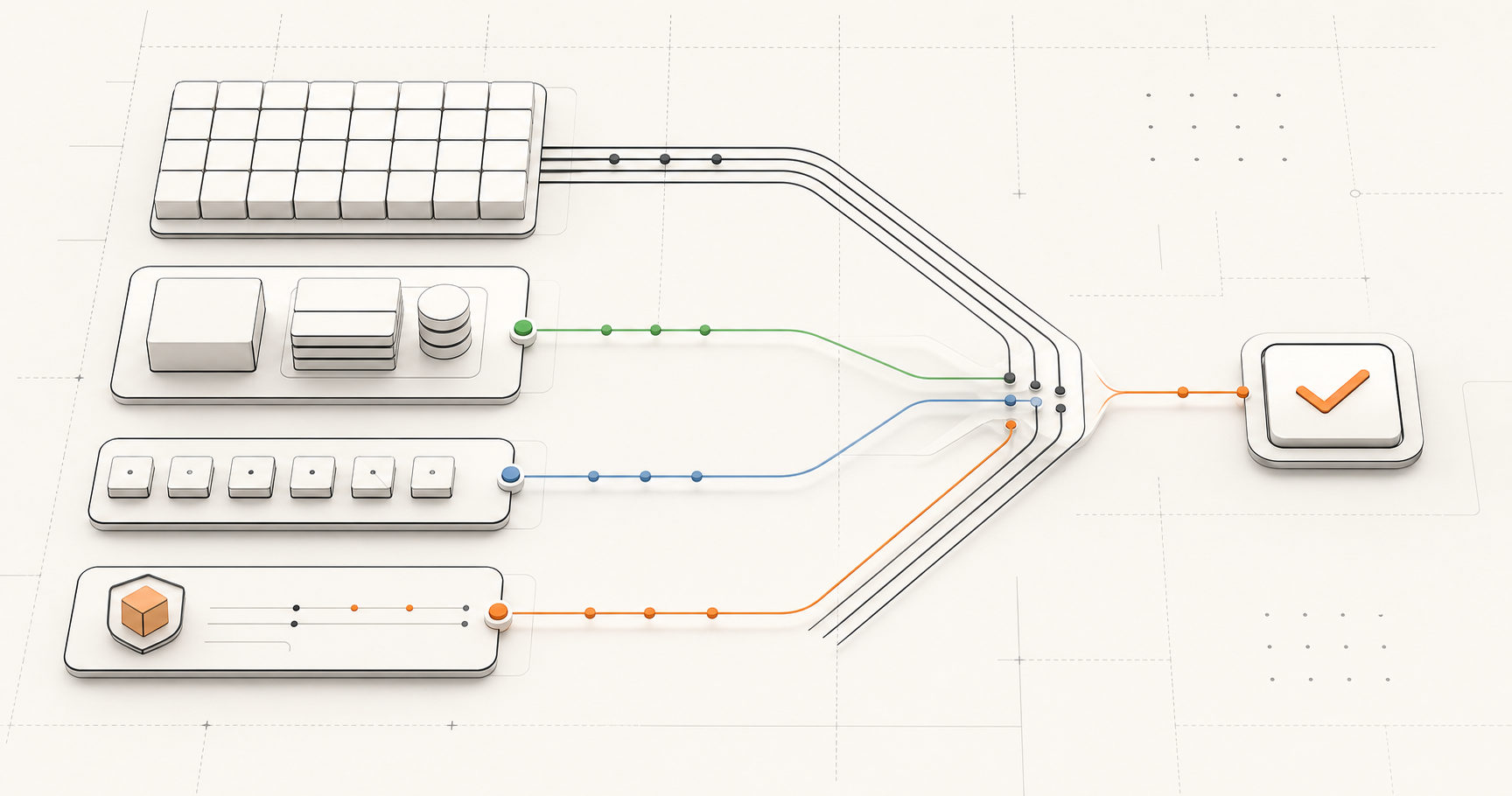
Rustbox vs Judge0: Choosing a Cloud Runtime for Untrusted Code
Compare Rustbox and Judge0 for secure code execution, AI agents, coding assessments, latency, language support, and operational fit.

Judge0 is a proven open-source code execution system with broad language coverage. Rustbox is a focused cloud runtime for teams that care most about untrusted-code safety, fast feedback, and agent-ready execution. The right choice depends less on brand preference and more on what your product needs to run.
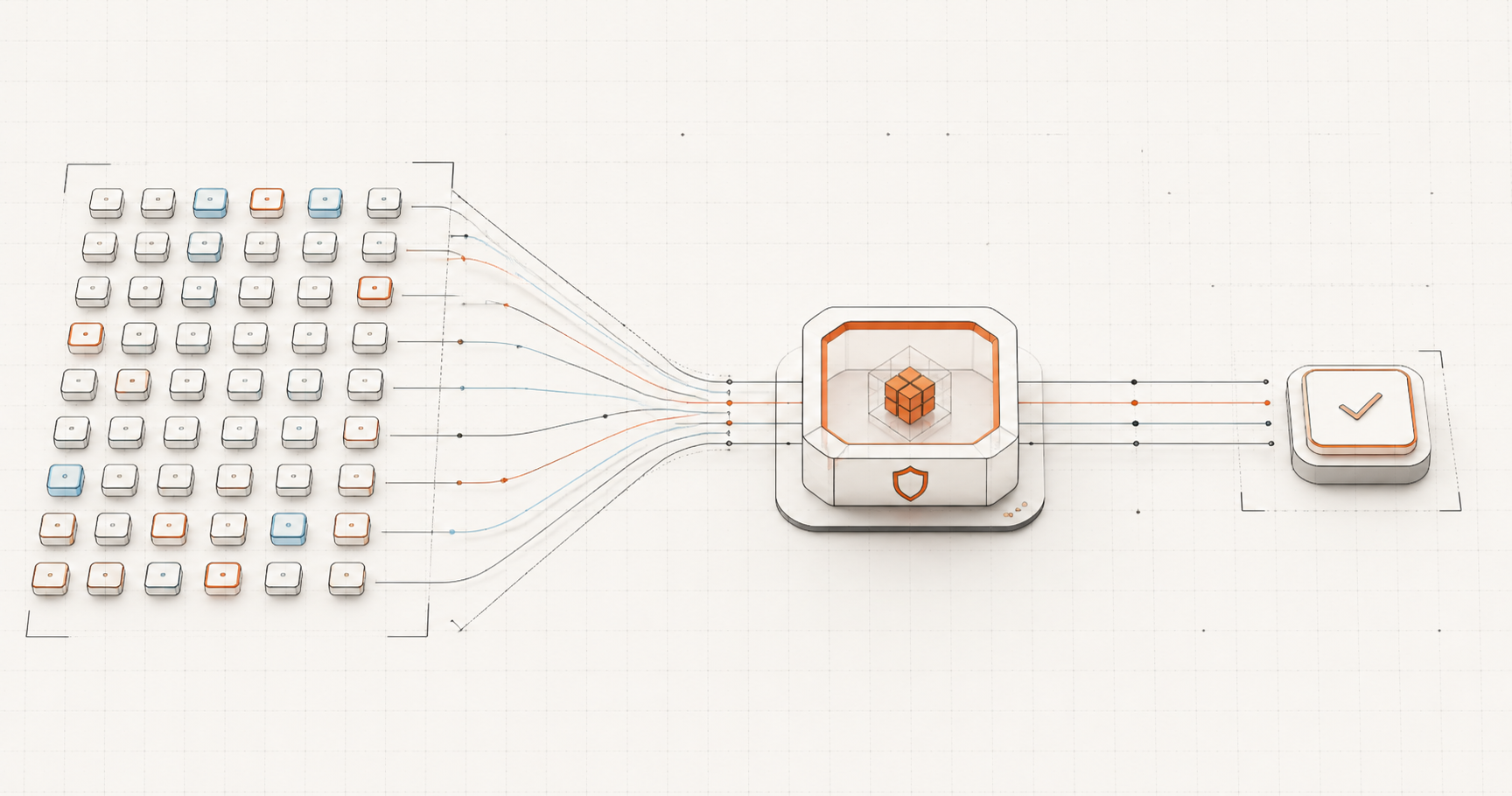
Quick answer: Rustbox or Judge0?
The choice between Rustbox and Judge0 comes down to infrastructure ownership and scope: Are you building a generic multi-language runner where you own the hosting and security, or a hyper-optimized secure product boundary?
Choose Judge0 when:
- ✓Your platform requires dozens of classroom and legacy languages (90+).
- ✓You have the DevOps bandwidth to secure, deploy, and upgrade runtimes.
- ✓You need a mature open-source base to self-host inside your VPC.
Choose Rustbox when:
- You need bulletproof sandboxing for untrusted code with zero infrastructure setup.
- Low end-to-end execution latency (milliseconds) is a critical product metric.
- You need structured, evidence-backed verdicts to drive AI or assessment logic.
What each platform is built for
Judge0 has been around since 2016 and is widely used in online judges, education platforms, IDEs, coding tools, and AI workflows. It is a strong fit when you need an open-source system you can self-host, modify, and stretch across many languages.
Rustbox starts from a narrower product question: how should a modern cloud product run code it does not fully trust? That code might come from a student, a job candidate, a customer workflow, or an LLM agent. Rustbox wraps execution in a simple API and returns output, timing, memory usage, status, and verdict fields in a predictable shape.
That makes the comparison fairly practical. If your roadmap needs COBOL, R, PHP, Assembly, and dozens of classroom languages, Judge0 has the advantage. If your roadmap needs Python, JavaScript, TypeScript, C, C++, Java, Go, and Rust with a cloud API tuned for untrusted code, Rustbox is the more focused fit.
Security posture without exposing the blueprint
Running untrusted code is security work. It is tempting to treat a code runner as a queue plus a timeout, but real products need a much stronger boundary. Programs can loop, allocate memory, spawn child processes, touch files, probe networks, or fail in strange ways.
Judge0 has a long public track record, but it has also had serious 2024 security advisories. GitHub and NVD describe CVE-2024-29021 as a Judge0 default-configuration issue that could allow sandbox escape and unsandboxed root execution on affected versions. Related 2024 advisories involved additional sandbox escape issues. The important publishing note is that Judge0 patched the affected versions, so this should be read as operational risk context, not a claim that current deployments are unpatched.
Rustbox’s specialty is that this boundary is the product. Public docs describe every run as a fresh, disposable execution with kernel-level isolation, strict resource controls, and verdicts backed by runtime evidence rather than simple exit-code guessing. That is enough detail for buyers to understand the value. The exact construction is intentionally not repeated here.
For engineering leaders, the distinction is operational. With Judge0, you can own and customize a mature runner. With Rustbox, you can call a cloud runtime designed so your product team does not have to become a sandbox-maintenance team.
Latency and runtime feedback
Latency matters more when execution sits inside a user-facing loop. A coding assessment can tolerate some delay. An AI agent waiting on a tool call, a live playground, or an interactive notebook cell feels slow much sooner.
End-to-end lifecycle (setup, run, and tear-down) for JS/Python. No pre-warmed pooling needed.
Varies dynamically based on deployment queue state, background workers, and VM host load.
For repeated, high-frequency execution where a human or LLM agent is waiting, Rustbox eliminates container queue bottlenecks. Judge0 remains highly scalable but delegates the container optimization, pooling, and server warming tasks to the hosting team.
Profiles for assessments and AI agents
Rustbox has a useful product idea: separate workload profiles. Judge mode is built for short, deterministic submissions such as coding tests, interviews, and contest-style execution. Network access is disabled and limits are intentionally tight.
The Agent profile is aimed at LLM tool execution, code interpreters, and REPL-like workflows. Rustbox docs currently describe Agent access as waitlisted while the infrastructure rolls out, with filtered network behavior and higher limits than Judge mode. Because the docs are still evolving, this article avoids hard-coding exact Agent resource numbers.
That profile distinction is one of Rustbox’s clearest advantages for AI products. Agent-generated code usually needs different boundaries from a competitive-programming answer. It may need a little more time, filtered outbound access, and a result shape that an orchestrator can inspect before continuing.
Language support and ecosystem
This is where Judge0 is strongest. The current Judge0 README says it supports 90+ languages. If your product’s value depends on broad language coverage, Judge0 is hard to beat.
Rustbox supports 8 languages today: Python, C, C++, Java, JavaScript, TypeScript, Go, and Rust. That is not trying to win the longest list. It covers the languages most teams reach for in coding assessments, AI tool execution, modern backend workflows, and developer-facing product features.
Rustbox also ships official SDKs for TypeScript, Python, Go, and Rust. The SDK model is deliberately small: submit a run, wait or poll when needed, handle typed errors, and read a structured result.
Decision table
| Need | Better fit | Why |
|---|---|---|
| 90+ languages | Judge0 | Breadth is Judge0’s clear strength. |
| Secure cloud execution API | Rustbox | Rustbox is built around untrusted-code execution as the core product boundary. |
| AI agent tool execution | Rustbox | Agent-oriented profiles and structured verdicts fit tool-call workflows. |
| Full self-hosting and customization | Judge0 | Judge0 is open source and designed for teams that want to own the deployment. |
| Low-latency interactive runs | Rustbox | Public Rustbox benchmarks include full execution lifecycle costs. |
| Existing Judge0 deployment | Depends | Keep it if it is patched, monitored, and meets your risk profile. Evaluate Rustbox when security operations or latency become product constraints. |
Final recommendation
If you are building a broad educational platform where language coverage wins, Judge0 is still a practical choice. It is established, open source, and flexible for teams that want to run their own infrastructure.
If you are building a modern product around untrusted code, especially AI agents, coding assessments, playgrounds, or developer tools, Rustbox is the more direct path. It gives you a focused language set, fast execution, clear verdicts, SDKs, and a cloud runtime designed for the problem you are actually trying to avoid owning.
That is Rustbox’s specialty: not being the biggest code runner, but being the safer and faster execution layer for product teams that cannot afford to treat sandboxing as an afterthought.
Frequently asked questions
Is Rustbox a Judge0 replacement?
It can replace Judge0 for products that need Rustbox’s supported languages, cloud API, low-latency execution, and stronger focus on untrusted-code boundaries. It is not a drop-in replacement for every Judge0 deployment because Judge0 supports far more languages.
Does Rustbox support AI agent code execution?
Yes. Rustbox is designed for code from users, agents, and LLMs. Its Agent profile is documented as waitlisted while infrastructure rolls out, so teams should check the current profile docs before planning production limits.
Which platform is better for coding assessments?
Both can work. Judge0 is attractive when assessments require many languages. Rustbox is attractive when assessments use a focused language set and need fast execution, clear verdicts, and less runner infrastructure to operate.
Where can I verify the security claims?
Start with the Rustbox security docs, Rustbox benchmark docs, the Judge0 README, and NVD entry CVE-2024-29021.
Try Rustbox for secure code execution
Start with the quickstart, then choose sync, async, or webhook execution for your product.
Open Rustbox quickstart