Rustbox vs Judge0 vs E2B vs Piston: Choosing a Code Execution Engine
Compare Rustbox, Judge0, E2B, and Piston across security posture, latency, language support, AI-agent fit, and operational tradeoffs.

Code execution engines used to be judged mostly by language count and API shape. AI agents changed the bar. Now teams need to know whether generated code can run with clear limits, useful failure signals, and a security boundary that does not become their next infrastructure project.
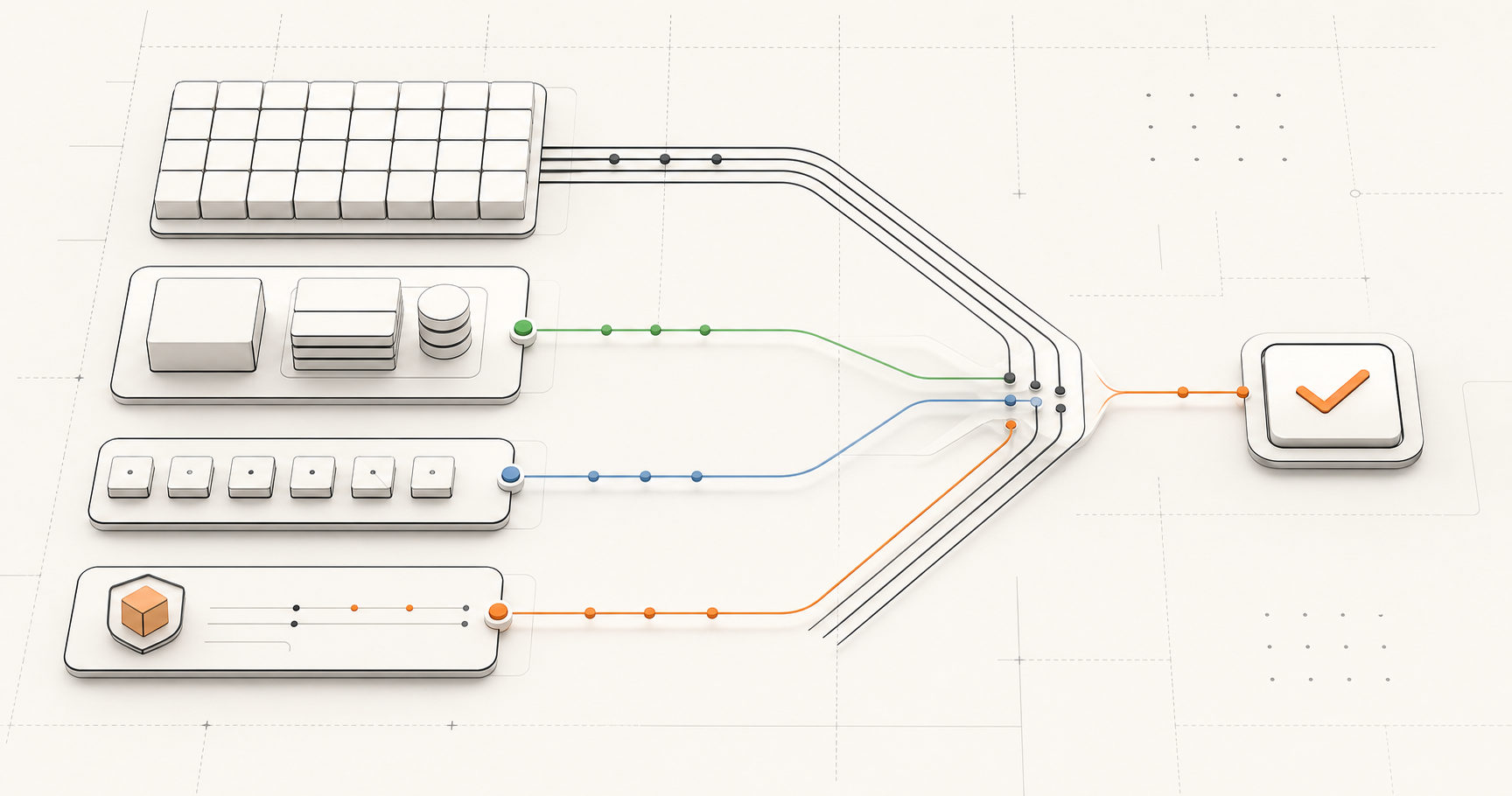
Quick comparison
Rustbox, Judge0, E2B, and Piston all run code, but they are built for different product bets. Judge0 and Piston are strong when language breadth matters. E2B is strong when an AI agent needs a full Linux workspace. Rustbox is strong when a product needs fast, bounded, security-focused execution with a clear result contract.
Best For:
Secure product APIs, coding assessments, and AI tool calls.
Core Strength:
~36ms low-latency runs with structured execution verdicts.
Best For:
Long-running AI agents and full interactive terminal environments.
Core Strength:
Persistent VM sandbox workspaces with custom Docker pre-bakes.
Best For:
Competitive coding sites and multi-language classrooms.
Core Strength:
Mature open-source engine supporting 90+ runtime variations.
Best For:
Online chat bots, quick editors, and casual runtime scripting.
Core Strength:
Simple REST endpoints and a vast community-maintained index.
| Engine | Best fit | Strength | Tradeoff |
|---|---|---|---|
| Rustbox | Secure product APIs, assessments, agent tool calls | Low-latency bounded runs + clear verdicts | Focused language set (8 core) |
| Judge0 | Education, online judges, broad-language platforms | Open-source system with 90+ supported languages | More setup, configuration & security ownership |
| E2B | Long-running agents and full Linux workspaces | Persistent VM-style environments with custom templates | Heavier startup (~80-200ms) than instant runtimes |
| Piston | Community tools, bots, hobby IDEs, broad execution | Simple API and a very large runtime catalog | Public API limits and self-hosting needs at scale |
The four contenders
Rustbox is a cloud runtime for untrusted code from users, products, and LLM workflows. It supports Python, C, C++, Java, JavaScript, TypeScript, Go, and Rust, and returns structured results with output, timing, memory, status, and verdict fields.
Judge0 is an established open-source online code execution system. Its current README describes support for 90+ languages, self-hosted and managed options, webhooks, custom limits, and detailed execution results.
E2B provides secure Linux sandboxes for agents. Its docs emphasize full terminal, filesystem, git, package-manager, persistence, and template support, which makes it a strong fit for coding agents that need a real working environment.
Piston is a high-performance, general-purpose code execution engine from Engineer Man. Its README lists a large set of supported runtimes and describes Piston as suited for untrusted code execution, public API usage, and self-hosting.
Security posture
The most important question is not “does this run code?” It is “what happens when the code is hostile, broken, or generated from ambiguous user input?” This is where the engines start to separate.
Rustbox’s specialty is treating untrusted-code execution as the core product boundary. Public Rustbox docs describe fresh execution environments, strict resource controls, and evidence-backed verdicts. This article intentionally does not repeat the internal security construction, because those details are part of the product’s defensive design.
Judge0 and Piston are both serious projects with explicit sandboxing stories. Judge0’s public history also includes patched 2024 sandbox escape advisories, including CVE-2024-29021. That does not mean every current Judge0 deployment is vulnerable; it means teams self-hosting code execution need disciplined patching, configuration review, and operational ownership.
E2B’s security story is different. It gives each agent a VM-style sandbox and is designed for full workspaces. That is valuable for long-running agents, but it is not always the smallest or fastest abstraction for a product that simply needs to run one bounded code request and return a verdict.
Latency and workload shape
Rustbox is optimized for short-lived execution. Its benchmark docs report 36 ms median latency for minimal Python, JavaScript, and TypeScript programs, with setup, execution, and teardown included. That matters when a user, grader, or agent is waiting for a result.
E2B’s site says same-region sandboxes start in less than 200 ms, with some site copy referencing 80 ms starts. That is fast for a VM-style sandbox, especially when the session continues for minutes or hours.
Judge0 and Piston performance depends heavily on deployment, runtime, queueing, language, and configuration. Piston’s public API is useful for quick integrations, but its README states the public instance is rate limited and recommends self-hosting for usage beyond that limit.
For high-frequency API calls, Rustbox’s narrower execution model is the practical advantage. For a coding agent that needs to keep working inside a repository, E2B’s longer session model is the better shape.
Language and environment coverage
Judge0 and Piston win on language breadth. Judge0 currently claims 90+ languages. Piston’s README lists a wide catalog that includes mainstream languages, scripting languages, database shells, and esoteric runtimes.
E2B wins on environment flexibility. Its template system lets teams define custom environments, startup commands, files, and dependencies. If your agent needs a real Linux workspace with a custom toolchain, E2B is designed for that.
Rustbox is intentionally curated. Its 8 supported languages cover the common path for coding assessments, developer tools, AI code execution, and backend product workflows. The tradeoff is simple: fewer languages, more focus on predictable execution and results.
Verdicts and observability
A code runner that only says “failed” is not enough for serious product workflows. The caller needs to know whether code crashed, timed out, exceeded memory, produced too much output, or hit a platform problem.
Rustbox’s evidence-backed verdict model is one of its clearest advantages. Results are structured around verdicts such as accepted, runtime error, time limit, memory limit, process limit, file size limit, signal, and internal error. That gives product code and agent orchestration a cleaner decision point.
Judge0 and Piston also return execution details, and E2B exposes rich sandbox operations for agent workflows. The difference is Rustbox’s product stance: the verdict is not just a label for stdout and stderr; it is part of the runtime contract.
Which should you choose?
| Choose | When... | Avoid when... |
|---|---|---|
| Rustbox | You need fast, bounded untrusted-code execution with clear verdicts for assessments, products, or agent tool calls. | You need dozens of niche languages or a persistent developer workspace. |
| Judge0 | You need a mature open-source runner with very broad language coverage. | You do not want to own deployment hardening, upgrades, and operational risk. |
| E2B | Your agent needs terminal, files, git, package managers, templates, persistence, and long-running work. | Your workload is mostly tiny run-and-return code execution. |
| Piston | You want a simple general-purpose engine with a large runtime catalog and self-hosting path. | You need a managed product boundary with first-class verdict-oriented observability. |
For many AI and developer-product teams, Rustbox is the most direct choice when the job is not “give my agent a computer,” but “run this untrusted code quickly, safely, and tell me exactly what happened.”
Frequently asked questions
Is Rustbox better than Judge0, E2B, and Piston?
Rustbox is better for a specific workload: fast, bounded, security-focused execution with structured verdicts. Judge0 and Piston are better for broad language coverage. E2B is better for persistent agent workspaces.
Which engine should I use for AI agents?
Use E2B when the agent needs a full Linux environment. Use Rustbox when the agent needs to run small code tools, validate results, or execute snippets inside a tighter product boundary.
Which engine should I use for coding assessments?
Rustbox is a strong fit when your assessment platform uses its supported languages and values low latency plus clear verdicts. Judge0 or Piston may fit better when language breadth matters more than a managed, focused runtime.
Where can I verify these claims?
Check the Rustbox benchmark docs, Rustbox language docs, Judge0 README, E2B docs, and Piston README.
Try Rustbox for secure code execution
Start with the quickstart, then choose sync, async, SDK, or webhook execution for your product.
Open Rustbox quickstart